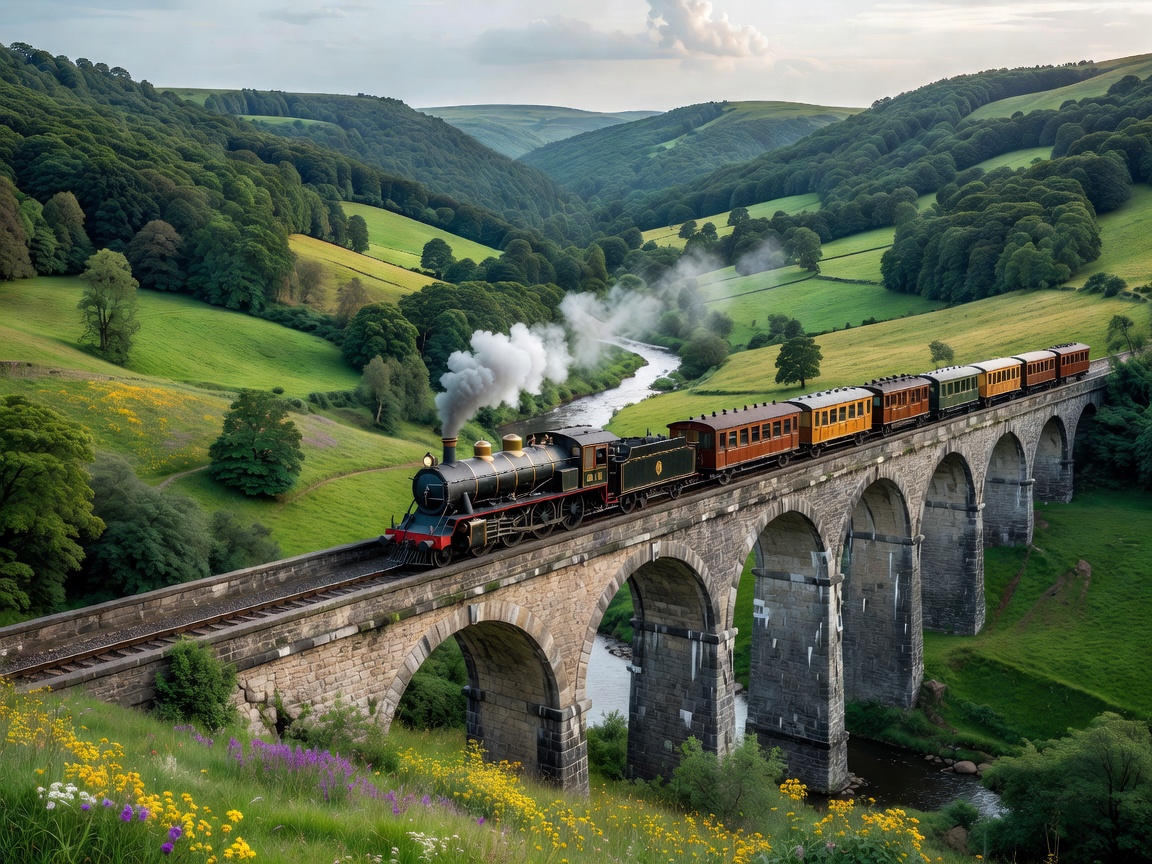
Mountain and valley routes
Mountain routes are often valued for elevation changes, bridges and enclosed sections. A route map can explain more than a viewpoint list. Look for loops, switchbacks, tunnels and long gradients. These features show how the railway solved a terrain problem.
Weather changes visibility. Cloud can hide high views while making forests and engineering details more prominent. Carry a flexible plan and avoid assuming that a clear forecast guarantees an open outlook.
Coastal and forest railways
Coastal lines may follow cliffs, estuaries or former industrial shore connections. Sea walls, short tunnels and exposed platforms can create a distinctive journey rhythm. Wind and salt exposure also matter to railway maintenance.
Forest routes provide changing shade, cuttings and glimpses between trees. They can be visually subtle rather than panoramic. Choose a seat according to the route and direction, but remember that stock and boarding arrangements may change.
Bridges, tunnels and elevation
Structures are evidence. A viaduct reveals span, material and valley crossing. A tunnel shows the limits of early surveying and construction. A steep gradient may explain locomotive choice, banking practice or the location of a former siding.
Observe from the train or designated public viewpoints. Never walk on tracks, enter tunnels or climb railway structures. A photograph is not worth ignoring a barrier or instruction.
Landscape observation
Break the journey into intervals: departure settlement, approach to open country, major structure, summit or pass, and arrival environment. This produces a more accurate account than describing every route as simply scenic.
Good for
- Passengers who want to understand railway engineering.
- Photography from public platforms and marked viewpoints.
- Comparing valleys, coasts, forests and countryside.
What to know
Window views depend on carriage orientation, weather and crowding. Current operating days and route variations must be checked with the official railway. Use designated platforms and public paths only.