Read the landscape first
A heritage railway is not only a train. It is a surviving relationship between settlement, terrain and transport. A narrow-gauge mountain line may be defined by reversals, viaducts and small halt buildings. A rural branch may be defined by goods yards, level crossings and modest platforms. An industrial railway may retain workshops, sidings or loading structures even when passenger service has disappeared.
Begin with the region. Note the main valley, coast, upland or industrial district. Then identify what the railway was built to connect. This gives the journey a useful historical frame without requiring an exact operating claim.
Mountain and upland railways
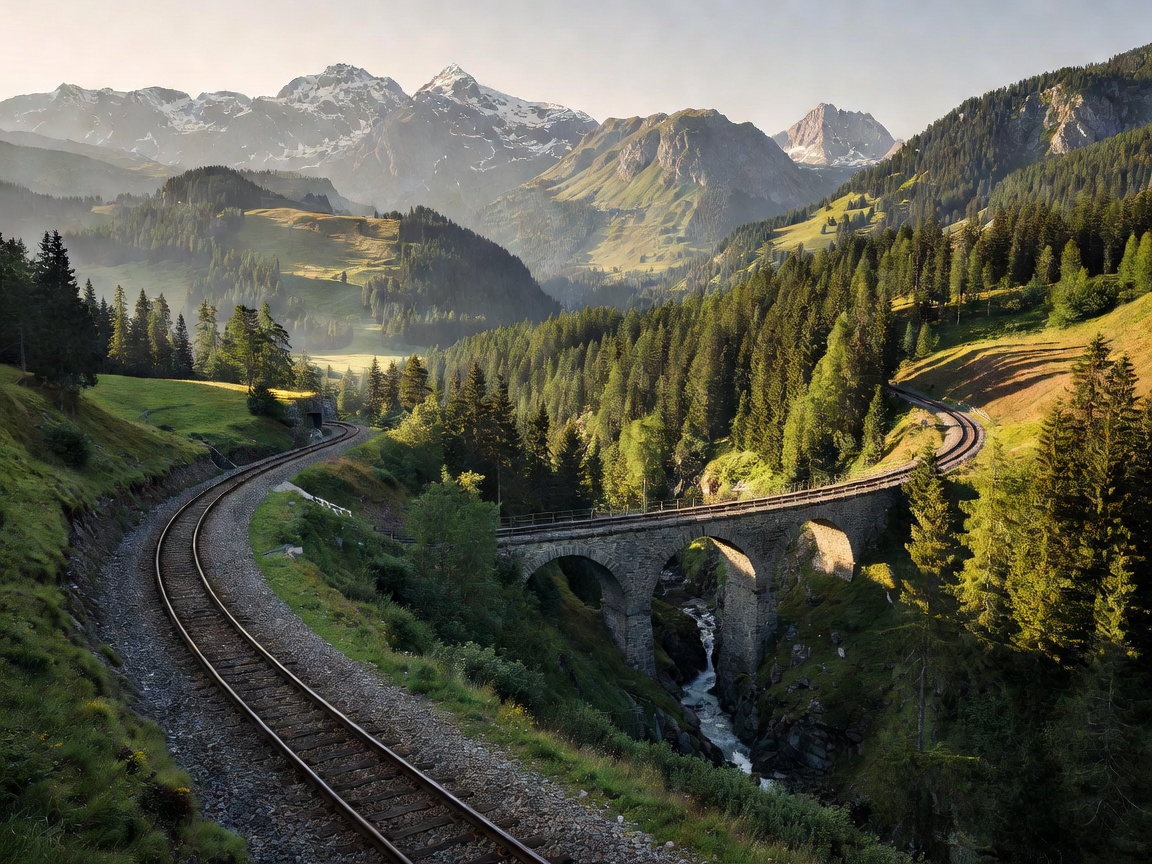
Mountain railways concentrate engineering in a small area. Curves, retaining walls, tunnels and bridges explain how the line negotiates elevation. Weather can change quickly. Platforms may be compact, and access can involve steps or uneven surfaces. Check the official visitor information for current access arrangements before travelling.
Upland lines often suit visitors interested in infrastructure as much as scenery. A slow journey makes the relationship between gradient, locomotive effort and landscape visible. Do not assume that a dramatic route is operated every day or throughout the year.
Rural, coastal and industrial regions
Rural heritage lines usually offer a quieter reading of railway life. Stations may retain goods sheds, signal posts, water facilities or local architectural details. Coastal routes can combine sea views with tunnels, sea walls and former resort traffic. Industrial areas may preserve cranes, sidings, workshops and mineral-loading arrangements.
These categories overlap. A coastal line can also be industrial. A rural branch can climb into a former quarry district. Use the regional setting as a starting point, not a rigid label.
Preservation approaches
Some railways focus on operating trains. Others emphasize a museum, a station complex, a working workshop or a preserved route corridor. The visitor experience changes accordingly. An operating line may provide a timetable-led journey. A museum may provide closer interpretation of objects and machinery. A station-led site may reward careful architectural observation.
Good for
- Comparing landscape and railway purpose.
- Choosing between scenic and infrastructure-led visits.
- Building a regional itinerary without assuming uniform operations.
What to know
Operating dates, access, ticketing and restoration areas can change. Use the railway’s official source for current details. Stay on designated visitor routes. Never cross tracks outside marked crossings or enter restricted railway property.